

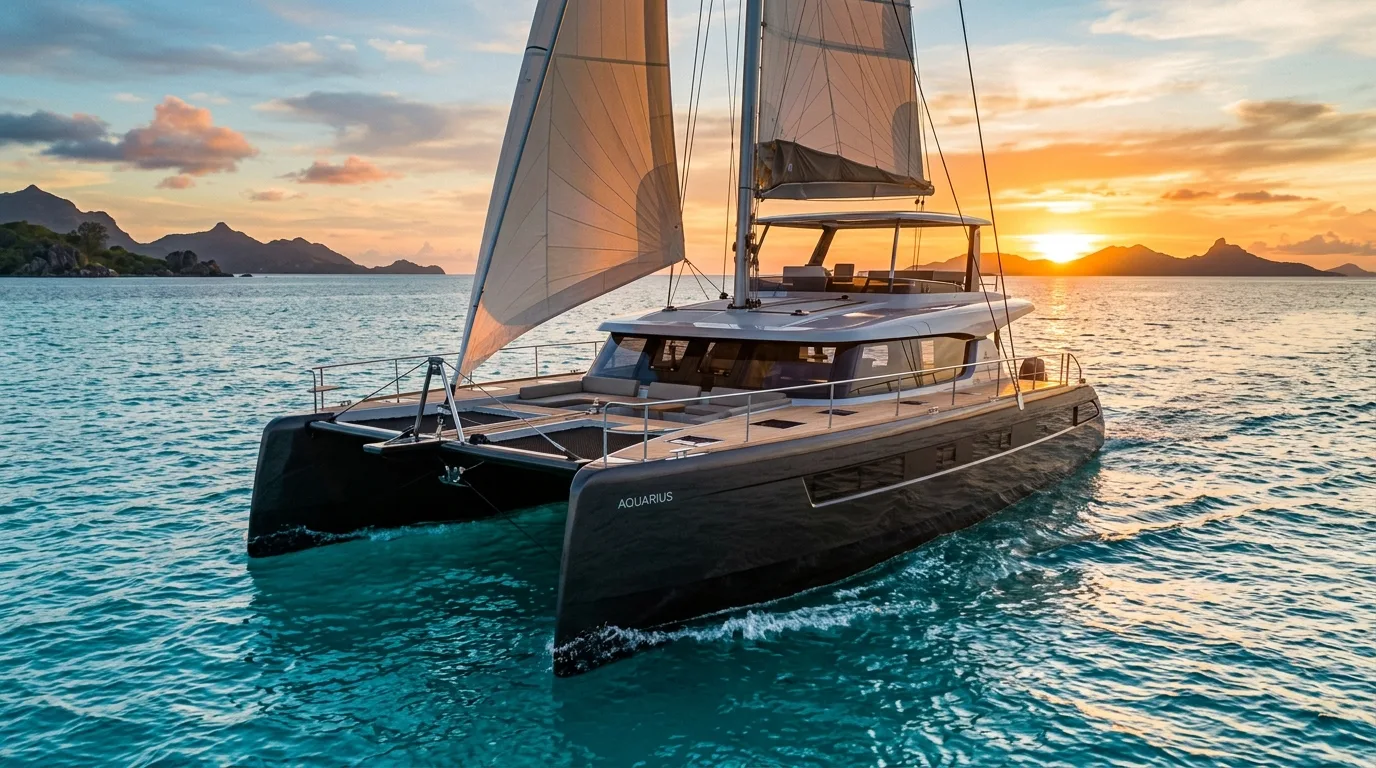

The Catamaran Buyer’s Handbook: Your Guide to Twin-Hull Freedom
Ah, the catamaran! Just the word conjures images of expansive decks, stable cruising, and shallow anchorages in crystal-clear bays. For decades, I’ve had the privilege of helping countless dreamers find their perfect vessel, and catamarans, with their distinctive twin-hull design, have certainly soared in popularity. They offer a unique blend of space, stability, and speed that makes them incredibly appealing, whether you’re dreaming of a weekend getaway or a true blue water adventure.
Table Of Content
- The Catamaran Buyer’s Handbook: Your Guide to Twin-Hull Freedom
- Why a Catamaran? The Twin-Hull Advantage
- Understanding Catamaran Types & Sizes
- Construction, Propulsion & Rigging Basics
- Maintenance Essentials for Your Twin-Hull Dream
- Choosing Your Dream Catamaran: Actionable Steps
- Your Twin-Hull Adventure Awaits!
At boatandsailboat.com, we know that choosing a boat is about more than just specs; it’s about matching a lifestyle. Let’s dive into everything you need to know about catamarans, from their design principles to practical ownership.
Why a Catamaran? The Twin-Hull Advantage
Unlike a monohull – a traditional single-hull boat design – a catamaran boasts two parallel hulls. This architecture brings several key benefits:
- Stability: Catamarans are inherently stable, reducing heel (the angle a sailboat leans) and seasickness. This makes for a much more comfortable experience, especially for families or those new to boating.
- Space: With their wide beam (width), catamarans offer unparalleled deck and interior living space compared to a monohull of similar length. Think expansive salons, multiple cabins, and generous cockpits.
- Shallow Draft: Many cruising catamarans have a relatively shallow draft, meaning they don’t sit very deep in the water. This allows access to secluded anchorages often off-limits to deeper keeled monohulls.
- Speed (Sailing): Their efficient hull shapes and large sail plans often translate to faster passage-making, particularly on downwind or beam reaches.
Understanding Catamaran Types & Sizes
Catamarans come in a fantastic range, each suited to different adventures:
- Day Sailers (Under 25 ft): Think nimble beach cats like a Hobie Cat or small, trailerable sailing catamarans. Perfect for quick trips, learning to sail, and adrenaline-pumping fun. They’re typically planing hulls – designed to skim on top of the water at speed.
- Coastal Cruisers (25-40 ft): These are excellent for weekend trips, extended holidays, and exploring local waters. Models like the Leopard 38 or Lagoon 39 offer comfortable accommodations for a family, often featuring a sloop rig (a single mast with a mainsail and a single headsail like a genoa).
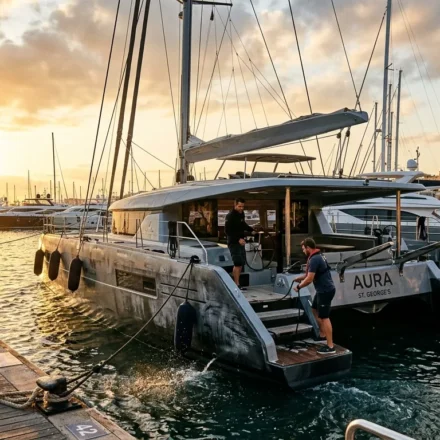
- Blue Water Cruisers (40+ ft): Designed for offshore passages and extended living aboard, these are robust, spacious vessels. Brands like Lagoon Catamarans, Fountaine Pajot, and Bali Catamarans dominate this market. They typically use displacement hulls, designed to move through the water efficiently rather than over it, and feature a Bermuda rig (a triangular mainsail and headsail).
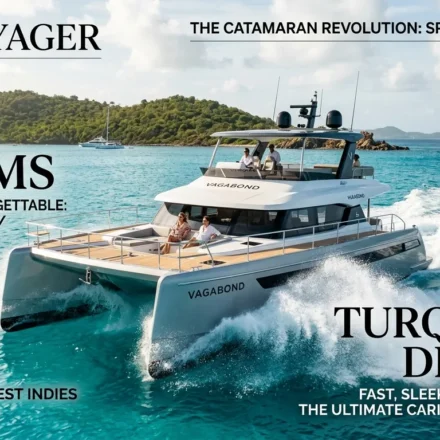
- Power Catamarans: Don’t forget power cats! With their twin engines and stable platforms, they offer incredible speed, fuel efficiency (compared to monohulls needing massive engines for similar space), and vast entertaining areas. Think models like the Aquila series. These often feature semi-planing hulls – a hybrid design for efficiency at various speeds.
Construction, Propulsion & Rigging Basics
Most modern catamarans are built from fiberglass (GRP – Glass Reinforced Plastic) for its strength-to-weight ratio and ease of maintenance. Some high-performance models may use carbon fiber for ultimate weight savings.
For propulsion, sailing catamarans typically rely on twin inboard diesel engines, often connected to saildrives (a leg-like unit extending through the hull, combining propeller and gearbox). Common brands include Yanmar and Volvo Penta. This twin-engine setup provides excellent maneuverability, especially in tight marinas. Power catamarans will have larger, more powerful versions of these engines, or sometimes outboard engines on smaller models.
Sailing catamarans almost exclusively use a Bermuda rig (also known as a Marconi rig), which is the triangular mainsail and headsail setup most commonly seen today. While less common, some larger cats might opt for a cutter rig (two headsails) or even a ketch rig (two masts, a main and a mizzen) for more versatile sail plans.
Maintenance Essentials for Your Twin-Hull Dream
Owning a catamaran means double the hulls, which often translates to double the engines and double the bottom paint!
- Annual Haul-Out: Essential for inspecting hulls, rudders, propellers, and applying fresh antifouling paint to prevent marine growth. Plan this annually or bi-annually depending on your location and usage.
- Engine Service: Both engines need routine maintenance – oil changes, filter replacements, impeller checks. Follow manufacturer recommendations, typically every 100-200 engine hours or annually.
- Sail Care: Inspect sails regularly for chafe, UV damage, and tears. Wash, repair, and store them properly, especially during longer periods ashore. Mainsails and genoas can last many years with good care.
- Corrosion Prevention: Check all metal fittings, especially in saltwater. Replace zinc anodes regularly to protect underwater metals from galvanic corrosion.
- Deck & Interior: Regular cleaning, checking hatches, windows, and through-hulls. Keep an eye on plumbing and electrical systems, particularly in the spacious, distributed layouts of catamarans.
Choosing Your Dream Catamaran: Actionable Steps
Ready to take the leap? Here’s how to navigate the waters of catamaran ownership:
- Define Your Mission: What do you want to do? Day sailing? Coastal cruising with family? Long-term blue water adventuring? Fishing? Your mission dictates the size and type of catamaran. For instance, a Lagoon 450 is a superb blue water cruiser, while a small Gemini 105MC might be perfect for coastal hops.
- Set Your Budget: Be realistic about purchase price, insurance, dockage, and ongoing maintenance. Catamarans often have higher dockage fees due to their beam.
- New vs. Used: New offers customization and warranty; used offers value and often includes essential cruising gear. If buying used, always get a professional marine survey – a thorough inspection of the vessel’s condition – and an engine survey.
- Sea Trial: Never buy without one! Experience the boat in various conditions. How does it handle under sail and power? Is it comfortable?
- Seek Expert Advice: Talk to experienced catamaran owners and, of course, a reputable yacht broker who specializes in multihulls. We’re here to guide you!
Your Twin-Hull Adventure Awaits!
A catamaran isn’t just a boat; it’s a floating home, a platform for discovery, and a ticket to unparalleled freedom on the water. The stability and space it offers can transform your boating experience, making it more comfortable and enjoyable for everyone aboard. From chasing sunsets to exploring remote islands, your catamaran will be the vessel for countless cherished memories.
Ready to find your perfect twin-hull partner? Explore the listings and resources here on boatandsailboat.com, or reach out to a trusted broker. The open water and the gentle sway of your future catamaran are calling!